How to Tie the Double Davy Knot: More Grip, Still Tiny
The double Davy knot adds one more pass to the Davy knot for slippery fluorocarbon and heavier tippet: step by step and when to choose it.
The double Davy knot is the Davy knot with one more pass. That single extra step gives it noticeably more grip, especially on slippery fluorocarbon, while keeping almost all of what makes the Davy knot so popular: it is small, quick to tie and uses very little line. If you fish small hooks, jigs or flies on fluorocarbon, this is often the best small knot you can tie.
When to use the double Davy knot
- Fluorocarbon leaders and tippet, which are harder and more slippery than mono and can let a simple knot creep under load.
- Tippet and leader from about 6 to 20 lb, where a single Davy knot starts to feel less secure.
- Small hooks and jigs for strong fish, for example light tackle fishing for snapper or bonefish.
- Flies and small lures you change often, because like the Davy knot it needs only about 10 cm of tag.
For heavy leaders, big lures or very strong fish, a larger knot such as the Trilene knot or the Palomar knot is still the safer choice.
How to tie the double Davy knot
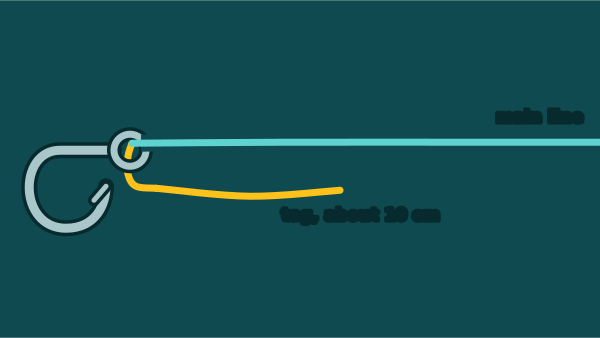
Pass about 10 cm of tag end through the eye of the hook or fly.
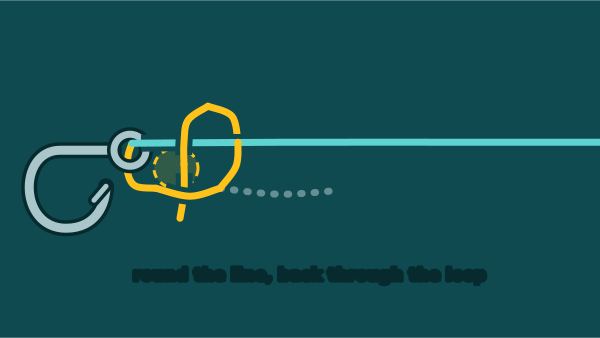
Take the tag around behind the main line, then pass it down through the loop between the line and the eye.
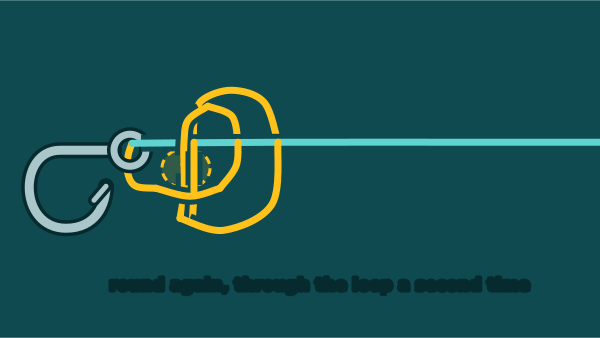
Take the tag around again and pass it through the same loop a second time.
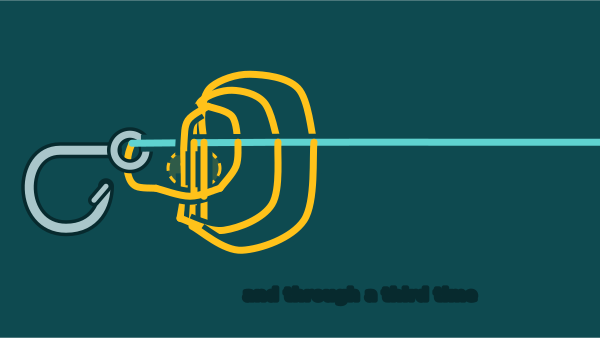
Take it around once more and pass it through the loop a third time. The third pass is the double Davy.
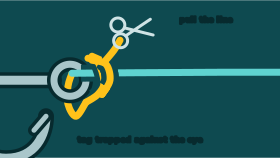
Wet it, pull the main line so the knot jams against the eye, and trim the tag.
What the third pass does
The Davy knot is two half hitches tied with the tag around the main line, close to the eye. When you pull the main line, the hitches slide down and lock against the eye, trapping the tag. With slippery line, two hitches can sometimes let the tag creep through under a heavy, steady pull. The third pass adds one more turn through the same loop, so there is more friction holding the tag. The knot is a touch longer, but still far smaller than a clinch knot.
All three passes go through the same opening, the small loop between the main line and the eye, and they should lie side by side in a neat row. If one pass goes through a different gap, the knot will not lock properly.
Seating the knot
Wet the knot well; fluorocarbon heats up quickly when it is pulled dry. Hold the tag lightly and pull the main line steadily. Watch the three passes slide together and down onto the eye. Give a firm test pull, then trim the tag, leaving 1 to 2 mm.
Davy or double Davy?
- Mono, light tippet, quick fly changes: the Davy knot is enough.
- Fluorocarbon or tippet above about 8 lb: use the double Davy.
- Big fish, heavy leader: choose a larger knot.
When in doubt, the extra five seconds for the double Davy are usually worth it.
Fluorocarbon and small knots
Fluorocarbon is popular for leaders because it is abrasion resistant and less visible underwater, but it is also stiffer and smoother than mono. Small knots tied in fluorocarbon need more grip and careful seating. If you are choosing leader material, see how to choose a fishing leader, and for joining that leader to braid, use an FG knot or double uni knot.
Using it for saltwater fly fishing
Saltwater fly anglers often change flies many times in a session. Every knot uses a little tippet, and when the tippet gets short it has to be replaced. Because the double Davy needs only a short tag, you can change flies far more often before you need new tippet. It also sits small and neat at the eye, so the fly swims naturally. The saltwater fly fishing guide covers the rest of the set-up.
Tips
- Practise all three passes with thick line first, until the path becomes automatic.
- Keep the passes neat and side by side.
- Wet it thoroughly before pulling, especially with fluorocarbon.
- Pull the main line, not the tag, to tighten.
- Retie if the knot looks loose, twisted or the tippet is curly near the eye.
Common mistakes
- Passing the third turn through a different opening.
- Taking the tag in front of the main line instead of behind it.
- Pulling fluorocarbon tight while dry.
- Trimming the tag flush before the knot is fully seated.
The double Davy is the small knot to trust on fluorocarbon. It gives you most of the speed of the Davy knot with more grip where it matters.
Identify your catch with ReelScan: snap one photo to get the species, size and safety notes, and earn points. Scan a fish.
Summary
The double Davy knot is the Davy knot with a third pass through the same loop. It stays tiny and quick to tie, uses little tippet, and holds much better in fluorocarbon and slightly heavier line. Use the Davy knot for light mono, the double Davy for fluorocarbon, and a larger knot when fish and leaders get heavy.