Double Uni Knot: How to Join Braid to Fluorocarbon Leader
Tie the double uni knot step by step to join two lines, braid to mono or fluorocarbon leader, quickly and reliably, even on a moving boat.
Most saltwater anglers today fish braid as their main line with a fluorocarbon or monofilament leader at the end. That means you need a reliable way to join two lines together, often on a moving boat with wet hands. The double uni knot, also called the uni to uni knot, is the fastest and easiest strong braid to leader knot to learn. This guide shows you how to tie it step by step, how many wraps to use for each line, and when to choose a slimmer knot instead.
What the double uni knot is used for
- Braid to fluorocarbon leader, the most common use.
- Braid to monofilament, for example adding mono backing under braid when you spool a reel, or adding a mono top shot for trolling.
- Mono to mono or fluoro to fluoro of similar or different diameters.
- Repairing a broken line quickly.
It works with lines of quite different diameters, which is exactly what you have when joining thin braid to thicker leader.
Why choose the double uni?
- Simple: it is just two uni knots, one tied with each line around the other. If you know the uni, you already know this knot.
- Fast: under a minute once practised, even in the dark.
- Strong: with the right number of wraps it keeps a good percentage of line strength.
- Reliable with braid: extra wraps on the braid side stop it slipping.
How to tie the double uni knot
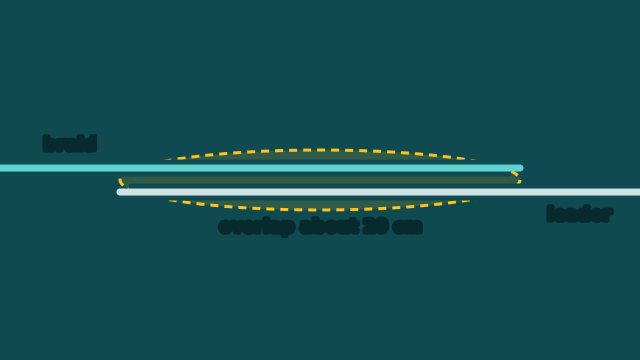
Overlap the braid and the leader by about 20 cm, tag ends pointing in opposite directions.
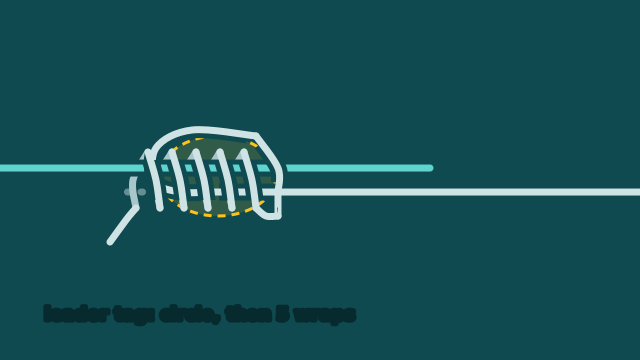
With the leader tag end, tie a uni knot around the braid: form a circle and make 5 wraps around both lines. Snug it lightly.
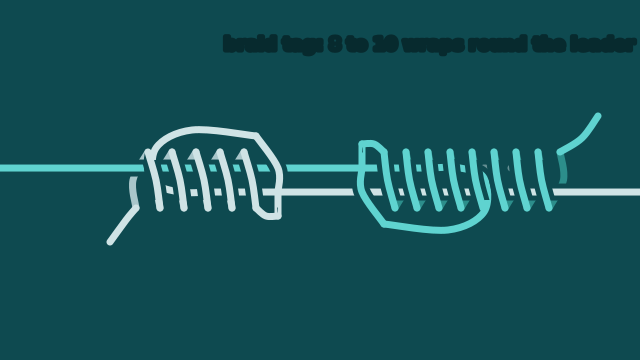
With the braid tag end, tie a second uni knot around the leader, using 8 to 10 wraps because braid is thin and slippery.
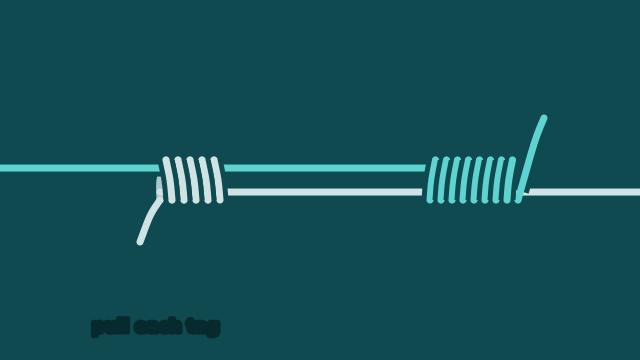
Wet both knots and pull each tag end to tighten each knot on its own.
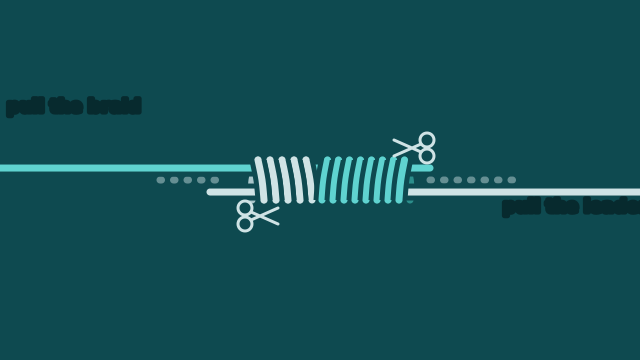
Pull the two main lines apart so the knots slide together and lock. Trim both tag ends close.
The right number of wraps
The secret to a strong double uni is using different wrap counts for each line.
- Fluorocarbon or mono leader side: 4 to 6 wraps. For very heavy leaders (50 lb and up), 3 to 4 wraps.
- Braid side: 8 to 10 wraps. Thin braid needs more wraps to grip.
- Mono to mono of similar size: 5 to 6 wraps each side.
A popular trick for extra security with braid is to double the braid (fold it to make two strands) before tying its uni knot, then make 6 to 8 wraps with the doubled braid.
Tips for a strong connection
- Wet both knots before tightening.
- Tighten each knot separately first, pulling its own tag end, before sliding them together.
- Slide them together firmly by pulling the two main lines, so the knots lock against each other.
- Trim the tags close but not flush, leaving 2 to 3 mm, especially on the braid side.
- Test it hard before casting.
Double uni vs FG knot
The FG knot is the main alternative for braid to leader connections.
- Double uni: faster and easier to learn, but bulkier. The knot can tick through rod guides on the cast and may catch on guides if your leader is long enough to sit inside the reel.
- FG knot: much slimmer and generally stronger, so it flies through guides with long leaders. It takes more practice and is harder to tie on a rocking boat.
Many anglers tie an FG at home before the trip and use the double uni as their quick, reliable on-the-water knot when they need to re-rig.
Choosing the right leader
Your leader's length and strength depend on the fish and the water. Clear water and shy fish call for longer, lighter fluorocarbon; rocks, reefs and toothy fish call for heavier leader. Read how to choose a fishing leader and compare lines in braid vs monofilament vs fluorocarbon.
Common mistakes
- Using the same number of wraps on both lines. Braid slips with too few wraps.
- Sliding the knots together before tightening each one. The wraps cross and weaken the knot.
- Tying it dry. Friction heats and damages the line.
- Leaving the knot inside the reel. If the double uni sits on the spool during a cast, it can catch and cause tangles. Keep your leader short enough that the knot is outside the reel, or switch to an FG knot.
When to retie
Inspect the knot after every fish and every snag. If either knot looks loose or the braid has started to fray next to it, cut it off and retie. Retie at the start of every trip; it takes a minute and protects your next fish.
Knot strength and drag
Remember that your line system is only as strong as its weakest point. Set the drag for the leader and knot, not for the braid rating. Our reel drag guide explains the 25 to 33 percent rule.
Where this knot fits in your setup
A complete modern setup might be: braid tied to the spool with a uni knot, joined to a fluorocarbon leader with a double uni, and the leader tied to the hook with an improved clinch knot or a Palomar knot. Learn those knots and you can rig almost any saltwater outfit.
Identify your catch with ReelScan: snap one photo to get the species, size and safety notes, and earn points. Scan a fish.
Re-rig fast, catch more, log every fish
The double uni gets you back in the water quickly after a break-off. When the next fish comes in, ReelScan identifies it from a camera photo, shows its size range, edibility and safety notes, and adds points to your profile. The more you fish, the more you learn about every species on your local grounds.
Summary
The double uni knot joins two lines with two uni knots that slide together and lock. Use 4 to 6 wraps on the leader side, 8 to 10 on the braid side (or double the braid), tighten each knot separately, then pull them together. It is the quickest reliable braid to leader knot; use the FG knot when you need the slimmest possible connection through your rod guides.