How to Tie the San Diego Jam Knot: Fast, Strong Lure Knot
The San Diego jam knot for tying lures and hooks to fluorocarbon and braid: step by step, why it holds, and when to use it.
The San Diego jam knot is a fast, strong knot for tying hooks, lures and swivels to fluorocarbon, mono and even braid. It was made popular by the tuna boats of San Diego, where anglers need to tie strong knots quickly between bites. This guide explains why it holds so well and how to tie it step by step.
Why anglers like it
- Strong: typically holds close to the full strength of the line, especially with fluorocarbon.
- Quick to tie, even with cold or wet hands.
- Compact, so it does not affect lure action much.
- Works with heavy fluorocarbon, where some knots are hard to tighten.
When to use it
- Tying fluorocarbon leaders to hooks and jigs for tuna and yellowtail.
- Tying lures directly to the leader.
- Attaching swivels and solid rings. See split rings and solid rings.
How to tie the San Diego jam knot
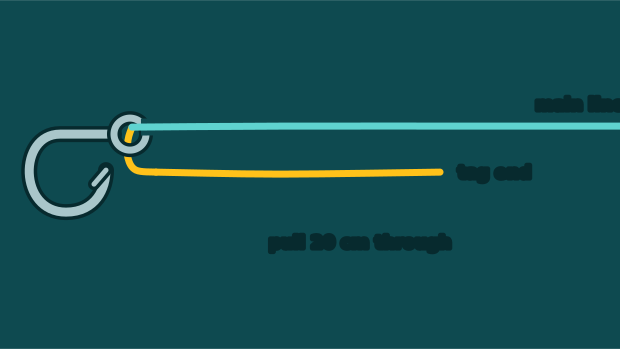
Pass the tag end through the eye of the hook or lure and pull about 20 cm through.
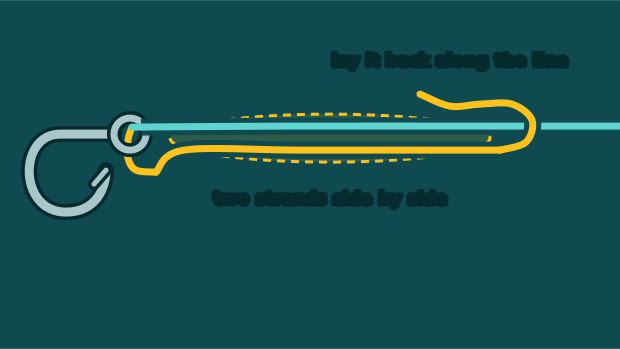
Lay the tag end back along the main line so the two strands lie side by side, with a loop at the far end.
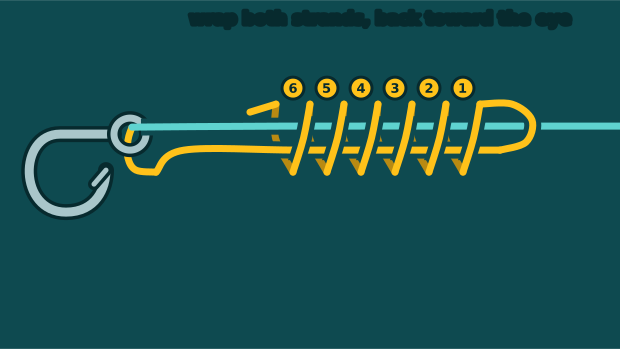
Wrap the tag end around both strands 6 to 8 times, working back toward the eye.
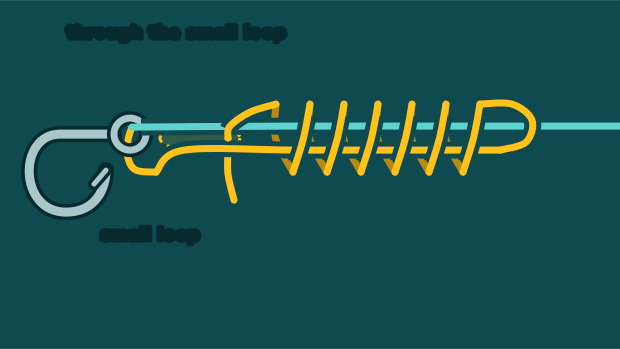
Pass the tag end through the small loop next to the eye.
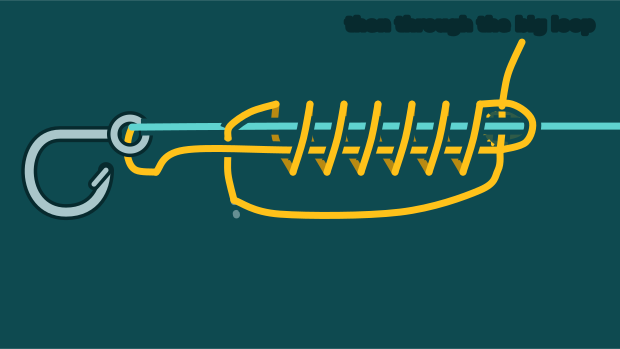
Then pass the tag end through the big loop at the far end of the wraps. This jams the knot.
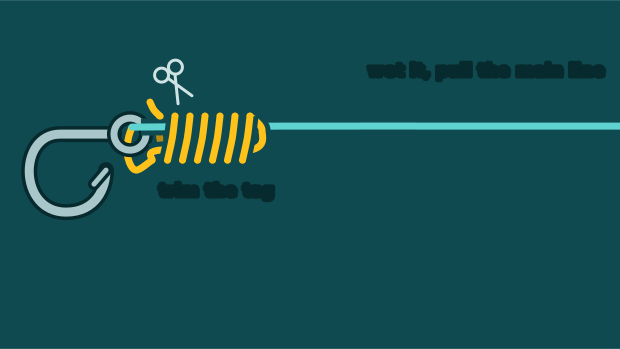
Wet the knot, pull the main line slowly until the wraps seat on the eye, and trim the tag to 2 to 3 mm.
Tips
- Do not cross wraps. Neat wraps give strength.
- Tighten slowly to avoid heat damage, especially with fluorocarbon.
- Leave a short tag (2 to 3 mm) as it can slip slightly when tightening.
San Diego jam vs Palomar vs clinch
- Palomar knot: very strong, easy, but needs a loop that passes over the lure, which is awkward with big lures. See Palomar knot.
- Improved clinch knot: simple, good for mono up to medium strength. See improved clinch knot.
- San Diego jam: fast, very strong with fluorocarbon, and works with any lure size.
If you want a loop connection for more lure action, use the non-slip loop knot.
Common mistakes
- Too few wraps on light line.
- Passing the tag end through the loops in the wrong order.
- Tightening dry, which weakens fluorocarbon.
Practise until you can tie it with your eyes closed. During a tuna bite, the fastest strong knot on the boat wins.
Identify your catch with ReelScan: snap one photo to get the species, size and safety notes, and earn points. Scan a fish.
Summary
The San Diego jam knot is quick, compact and very strong, especially with fluorocarbon leaders. Make neat wraps, pass the tag through both loops in order, moisten, and tighten slowly. It is a great everyday knot for hooks and lures in saltwater.