How to Tie an Australian Braid: A Strong Loop or Double Line
The Australian braid (plait) makes a strong, slim loop or double line in braid or mono: step by step, uses, and how it compares with the Bimini twist.
The Australian braid, also called the Australian plait, turns the end of a line into a strong loop or double line by plaiting the doubled line together with the tag. It does the same job as the Bimini twist but is often easier to tie, especially in braid, and it makes a slim, flexible section that casts well. Offshore anglers use it to create a double line for leader connections and wind-on leaders.
When to use the Australian braid
- Making a double line for joining to a leader with a strong connection.
- A loop for loop-to-loop wind-on leaders used in trolling and jigging.
- Strengthening the end of braid before tying a leader knot.
- When a Bimini twist is hard to tie, for example without a partner or on a moving boat.
For a quick loop in mono, the surgeon's loop or perfection loop is simpler. For joining braid straight to a leader without a double line, the FG knot is common.
How to tie the Australian braid
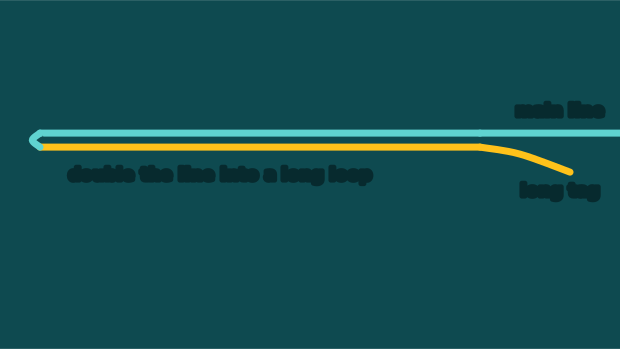
Double the line into a long loop, leaving a long tag.
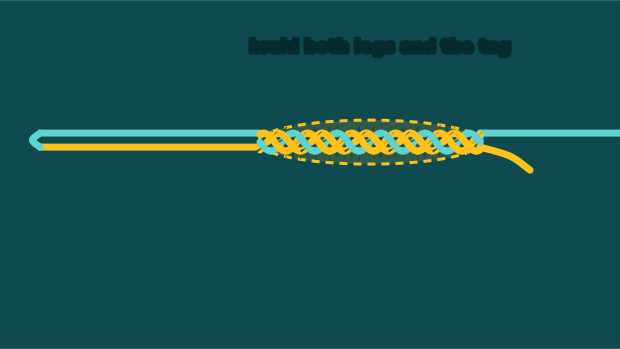
Plait the two legs of the loop and the tag tightly together, working toward the loop.
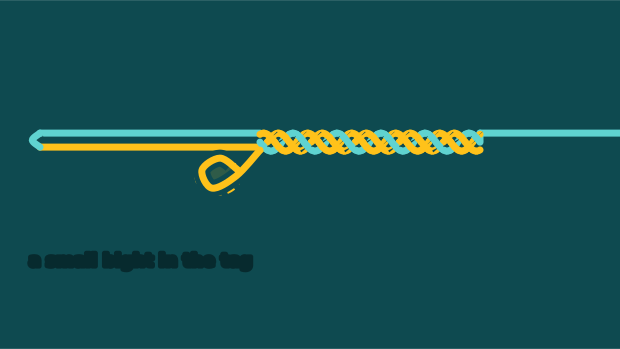
Fold a small loop (a bight) in the tag next to the end of the braid.
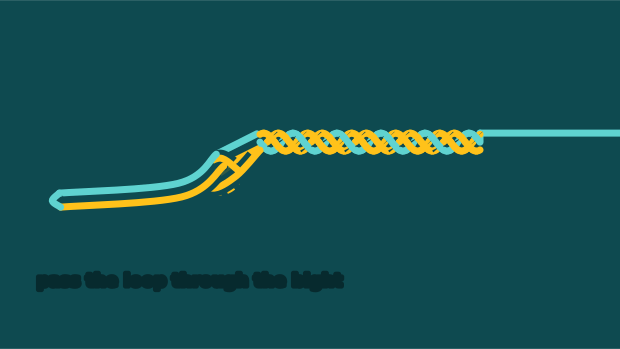
Pass the whole loop through the bight in the tag.
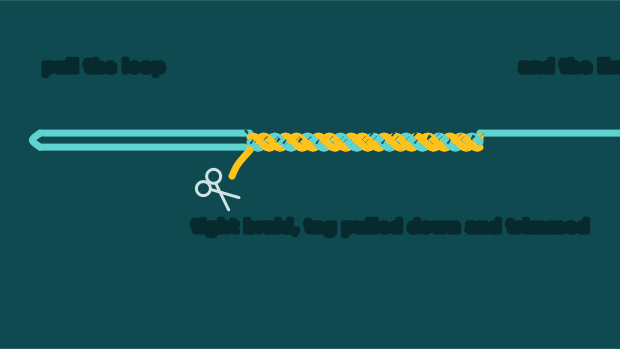
Pull the tag to lock the bight against the braid, then pull the loop and the line. Trim the tag.
How the braid works
A normal three-strand plait uses three strands crossing over each other in turn. In the Australian braid, the three strands are the two legs of the doubled line and the tag. The plait spreads the load along a long section of line, so when the line is pulled, the force is shared by many crossings instead of being concentrated at one point. That is why a well-tied Australian braid holds close to the full strength of the line.
How long to make it
- Braid for a double line: a plait of about 8 to 15 cm.
- Long double lines for big game: longer plaits and a longer loop.
The longer the plait, the more evenly the load is spread, but the longer it takes to tie. For most offshore fishing, a plait of 10 cm is a good balance.
Locking the end
The plait must be locked or it will unravel. The method shown here makes a small bight in the tag and passes the whole loop through it, then pulls the tag down to lock. Some anglers also add a few half hitches with the tag around both legs, or a drop of glue. Whatever finish you use, make sure the tag is held firmly before you trim it.
Australian braid vs Bimini twist
- Bimini twist: a twisted double line, very strong, a classic for big game. It needs practice and two hands, sometimes a knee or a partner.
- Australian braid: a plaited double line, also very strong, easier for many anglers to tie, slim and flexible.
Both make an excellent base for leader connections such as the Albright knot or loop-to-loop wind-on leaders. For an overview of offshore set-ups, see the offshore trolling guide and top shot for tuna.
Line types
The Australian braid is most popular in braid, where it bites well when plaited tightly. It also works in mono, but mono is stiffer and harder to plait neatly. Choose a quality braid; see the best braided line for saltwater.
Tips
- Leave a long tag; the plait uses a lot of line.
- Plait tightly and evenly, with no loose crossings.
- Keep tension on all three strands while plaiting.
- Lock the end securely before trimming.
- Test it with a firm pull on the loop and the line.
Common mistakes
- Plaiting loosely, so the braid stretches and slips.
- Losing the order of the strands halfway through.
- Not locking the end, so the plait unravels.
- Making the plait too short for the load.
If the Bimini twist frustrates you, learn the Australian braid. It gives you a strong double line with a method many anglers find easier to repeat on the water.
Identify your catch with ReelScan: snap one photo to get the species, size and safety notes, and earn points. Scan a fish.
Summary
The Australian braid plaits the two legs of a doubled line with the tag to make a strong, slim loop or double line. Double the line into a long loop, plait the legs and the tag tightly toward the loop, make a bight in the tag, pass the loop through it, and pull the tag to lock it. Use it as a base for strong leader connections in offshore fishing.