How to Tie the Rapala Knot: A Loop Knot That Lets Lures Swim
The Rapala knot step by step: a non-slip loop with one extra pass that leaves an open loop at the lure eye for a freer, livelier action.
The Rapala knot is a loop knot made famous by the lure company of the same name. Like the non-slip loop knot, it ties your line to the lure with a small open loop instead of a tight knot against the eye. That loop lets the lure swing and wobble freely, which is exactly what many hard-bodied lures are designed to do. The Rapala knot adds one extra pass at the end, which locks the wraps and gives a neat, reliable finish.
Why a loop knot changes how a lure swims
A tight knot clamps the lure eye to the line. Every time the line moves, the lure is pulled stiffly with it. A loop gives the eye room to move, so the lure can roll, dart and wobble on its own. This matters most with:
- Minnow plugs and crankbaits, which rely on a lip and a free swinging action.
- Jerkbaits and twitch baits, where a loose connection gives a sharper, more erratic dart.
- Topwater walkers and poppers, covered in the topwater lures guide.
- Small soft plastics and jig heads in clear water, where natural movement earns more bites.
Lures with a built-in split ring or snap already move freely and do not need a loop knot. For hooks and lures where you want a direct, tight connection, use the San Diego jam knot or the improved clinch knot.
How to tie the Rapala knot
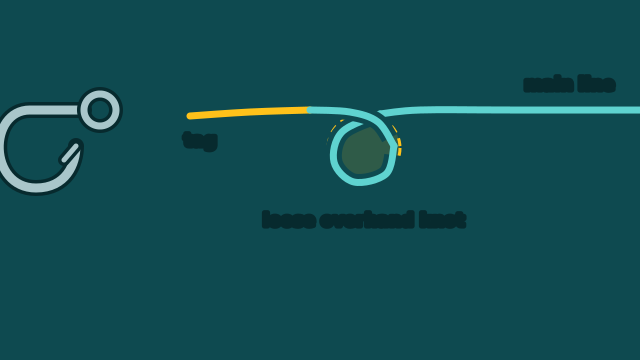
Tie a loose overhand knot in the line about 15 cm from the end.
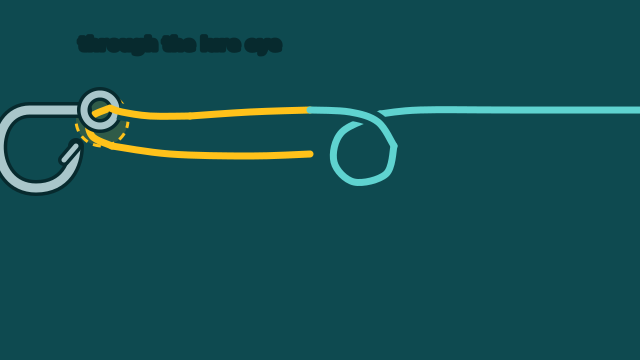
Pass the tag end through the eye of the lure.
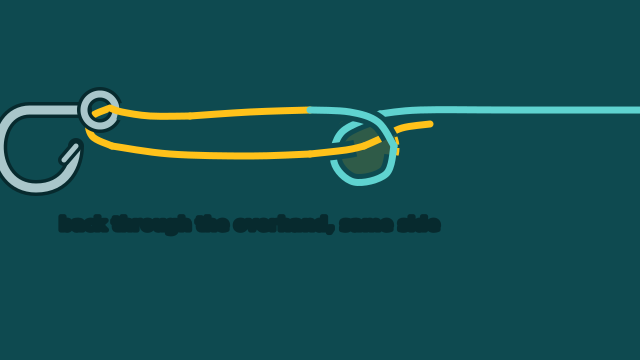
Bring the tag back through the overhand knot, from the same side it came out.
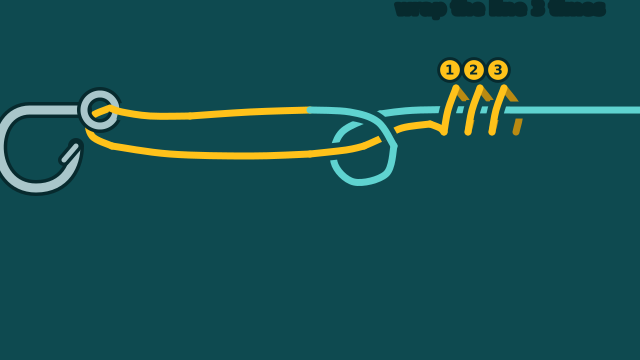
Wrap the tag around the main line 3 times.
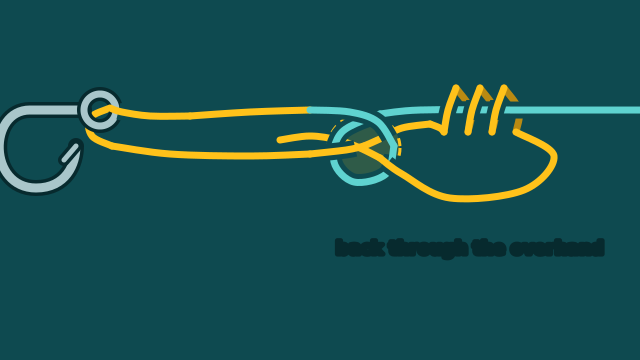
Pass the tag back through the overhand knot.
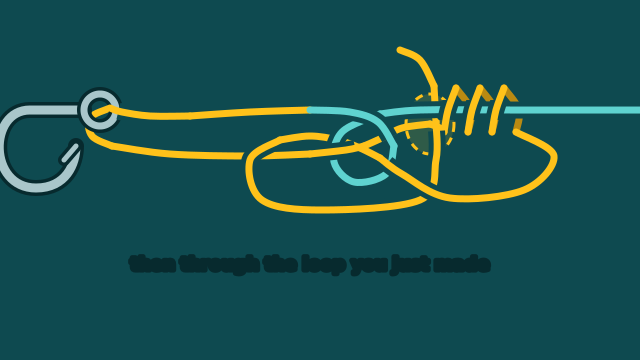
Then pass it through the loop you have just made between the wraps and the overhand.
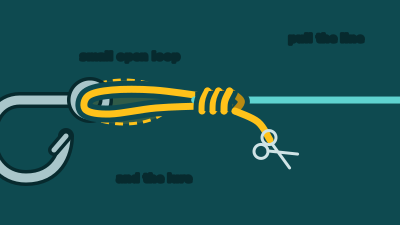
Wet it, pull the tag, then the line and the lure, and trim. The loop stays open at the eye.
What the extra pass does
The first part of the Rapala knot is the same as the non-slip loop: a loose overhand knot, the tag through the lure eye and back through the overhand, wraps around the main line, and the tag back through the overhand. The Rapala knot then takes the tag once more through the small loop that has just formed between the wraps and the overhand. That final pass traps the tag so the wraps cannot unwind, and it makes the knot sit neatly when it is pulled tight.
Setting the loop size
The size of the loop is set when the tag goes back through the overhand the first time. Slide the overhand toward or away from the lure before you start wrapping. A loop of 3 to 8 mm is ideal for most lures. A loop that is too big can catch the front hook, especially on long casts, and a loop that is too small behaves almost like a tight knot.
How many wraps
The Rapala knot is normally tied with three wraps. That works well in mono and fluorocarbon from about 6 to 30 lb. In very light line, four wraps can help. In heavy leader, three wraps are plenty; more wraps simply make the knot hard to seat.
Seating the knot
Wet the knot well. Pull the tag first to bed the wraps, then pull the main line and the lure in opposite directions. The overhand slides down against the wraps and the loop stays open at the eye. Check that the loop is the size you wanted, give a firm test pull, and trim the tag to 2 to 3 mm.
Rapala knot vs non-slip loop knot
- Non-slip loop knot: slightly simpler, very strong, wraps adjusted to line strength.
- Rapala knot: three wraps plus a locking pass; tidy and easy to remember.
Both give a free-swinging lure. Many anglers use the non-slip loop in light line and the Rapala knot in mid-weight leaders, but either works well when tied carefully.
Fishing with a loop knot
Loop knots shine when you are casting and retrieving hard lures for fish such as snook, seabass, bluefish and inshore snapper. For the wider picture of lure choice and retrieve styles, see the inshore lure fishing guide.
Tips
- Keep the loop small. A big loop tangles with treble hooks.
- Use fluorocarbon or mono. Loop knots are less reliable in straight braid; tie a leader first.
- Retie after every few fish or if the loop looks flattened.
- Wet the knot before pulling it tight.
- Check the loop is open after landing a fish; a tightened loop changes the action.
Common mistakes
- Tightening the overhand before the tag has passed through it.
- Entering the overhand from the wrong side, which twists the loop.
- Forgetting the final pass through the new loop.
- Making the loop too big.
- Pulling only the main line, so the wraps do not bed down.
If your lure seems lifeless on a tight knot, retie it with a Rapala knot and fish the same retrieve. The difference in action is often obvious in clear water.
Identify your catch with ReelScan: snap one photo to get the species, size and safety notes, and earn points. Scan a fish.
Summary
The Rapala knot is a non-slip loop with an extra locking pass. It leaves a small open loop at the lure eye so hard lures swim freely and naturally. Tie a loose overhand, pass the tag through the eye and back through the overhand, make three wraps, go back through the overhand and then through the new loop, wet it and pull it down.