How to Tie the Double Turle Knot: Keep a Fly or Hook in Line
Tie the double Turle knot so the leader pulls straight through an up- or down-turned eye: step by step, uses and limits.
The double Turle knot is an old and clever knot for hooks and flies with an eye that is turned up or down. Instead of gripping the eye itself, its loops close around the shank just behind the eye. That way the leader comes straight out through the eye and the hook or fly sits in line with the leader rather than at an angle. It is a favourite of fly anglers with up-eye and down-eye flies, and it also works well with small bait hooks that have a turned eye.
When to use the double Turle knot
- Flies and hooks with a turned-up or turned-down eye, to keep them in line with the leader.
- Small hooks for bait, where you want the point to sit straight.
- When presentation matters, for example when fish are inspecting a fly or bait closely in clear water.
For hooks with a straight eye, a knot that grips the eye directly is simpler and stronger; use the Davy knot for small hooks or the improved clinch knot for general use. For bait hooks where you want the line to pull straight off the shank, the snell knot is another excellent choice.
How to tie the double Turle knot
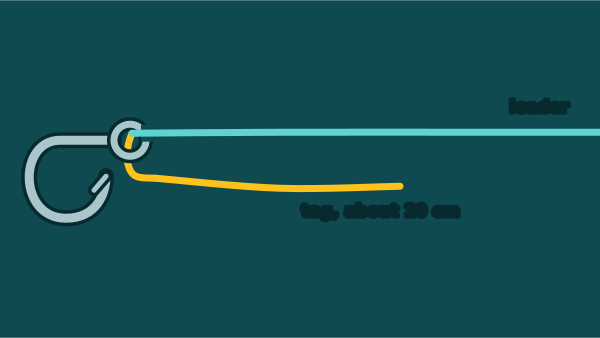
Pass the tag through the eye, leaving about 20 cm. The loops need line.
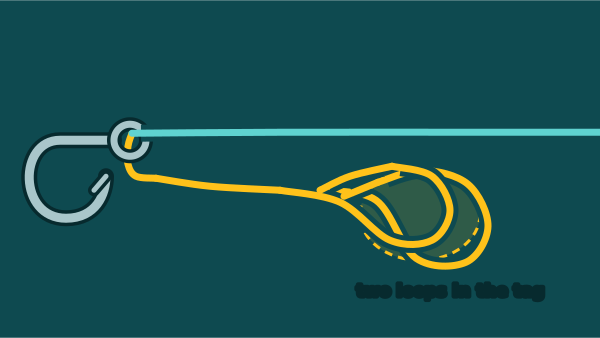
Make two loops side by side in the tag, each big enough to pass the hook through.
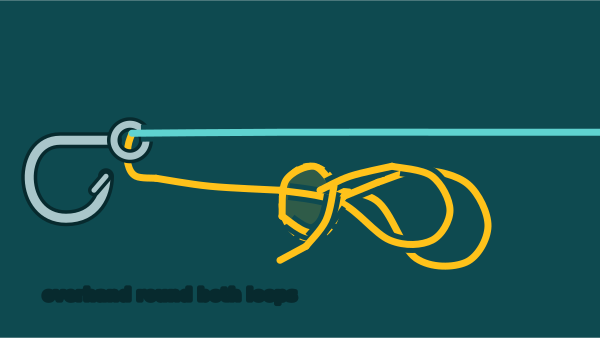
Tie an overhand knot with the tag around the base of both loops.
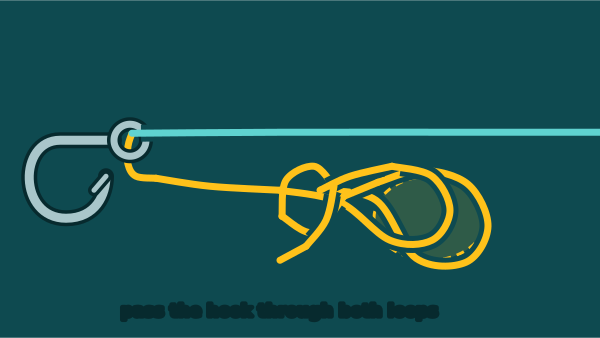
Pass the hook or fly through the two loops.
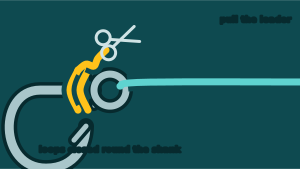
Pull the leader so the loops close round the shank behind the eye, and trim the tag.
Why the knot sits behind the eye
Most hook knots grip the eye. On a turned eye, that makes the leader pull from an angle, so the hook or fly hangs crooked. The Turle knot works differently: the tag makes loops that are passed over the whole hook and then close around the shank behind the eye. The leader runs through the eye and pulls in a straight line along the shank. The "double" Turle uses two loops instead of one, which grips more securely and is far less likely to slip.
Getting the loops right
The two loops must be big enough to pass the hook or fly through easily, and they should lie side by side. The overhand knot tied with the tag goes around the base of both loops, not around one of them. When you pass the hook through, make sure it goes through both loops before you pull.
Seating the knot
Hold the hook and pull the leader slowly. The loops slide along the shank and close tightly just behind the eye, with the overhand sitting on top. Check that the leader comes straight out of the eye. If it is crooked, the loops have closed on the eye itself rather than behind it; loosen it and seat it again. Trim the tag close.
Strength and limits
The double Turle knot is not the strongest knot you can tie, but it is strong enough for the light tippets and leaders it is normally used with. Its real value is presentation. It is not a good choice for:
- Straight-eye hooks, where it adds nothing.
- Heavy leaders, where the loops are hard to close neatly.
- Very large hooks and big fish, where a stronger knot is safer.
Turle knot and saltwater fly fishing
Many saltwater flies are tied on straight-eye hooks, but some patterns and many small freshwater-style flies used in the sea have turned eyes. When you fish those for species such as bonefish or permit, the double Turle keeps the fly riding correctly. The saltwater fly fishing guide explains the rest of the set-up, and the types of fishing hooks guide explains eye styles.
Tips
- Leave a long tag, about 20 cm; the loops use line.
- Keep the loops the same size, side by side.
- Tie the overhand around both loops.
- Seat it behind the eye, not on it.
- Check the fly is in line before you cast.
Common mistakes
- Tying the overhand around only one loop.
- Passing the hook through only one loop.
- Letting the loops close on the eye instead of the shank.
- Using it on a straight-eye hook where a simpler knot is better.
If a fly with a turned eye keeps swimming on its side, the knot is often the cause. Retie it with a double Turle and watch it ride straight.
Identify your catch with ReelScan: snap one photo to get the species, size and safety notes, and earn points. Scan a fish.
Summary
The double Turle knot closes two loops around the shank behind a turned eye, so the leader pulls straight through the eye and the hook or fly sits in line. Pass the tag through the eye, make two loops, tie an overhand around their base, pass the hook through both loops, and pull the leader until the loops close behind the eye.