How to Tie a Fish Finder Rig for Surf Fishing
Build a fish finder rig step by step: sliding sinker, bead, swivel, leader and circle hook, the classic surf rig for drum, bass and bluefish.
The fish finder rig is the most popular surf fishing rig in the world, and for good reason. It is simple to tie, works with almost any bait, and lets a fish pick up and swim off with your bait without feeling the weight of the sinker. That means more confident bites and more fish hooked. This guide shows you how to build a fish finder rig step by step, explains each part, and gives setups for drum, striped bass, bluefish and other surf species.
How the fish finder rig works
Your main line passes through a sinker slide (or the eye of the sinker), so the sinker can slide freely along the line. Below it, a bead and a swivel stop the sinker from sliding down to the hook. A leader runs from the swivel to the hook.
When a fish picks up the bait and swims away, the line slides through the sinker slide. The fish feels little resistance and keeps the bait, while you feel the bite clearly through the line. Because the sinker holds the bottom independently, your bait stays in the strike zone even in surf and current.
What you need
- Sinker slide (a plastic sleeve with a clip) or a sinker with a large eye.
- Pyramid or grip sinker, usually 85 to 170 g (3 to 6 oz) depending on surf and current.
- Bead (plastic or glass), to protect the knot.
- Barrel swivel, sized above your line strength.
- Leader: 45 to 60 cm (18 to 24 in) of 30 to 60 lb monofilament or fluorocarbon.
- Circle hook, usually 3/0 to 8/0 depending on your target.
All of these are explained in sinkers, swivels and terminal tackle.
How to tie a fish finder rig
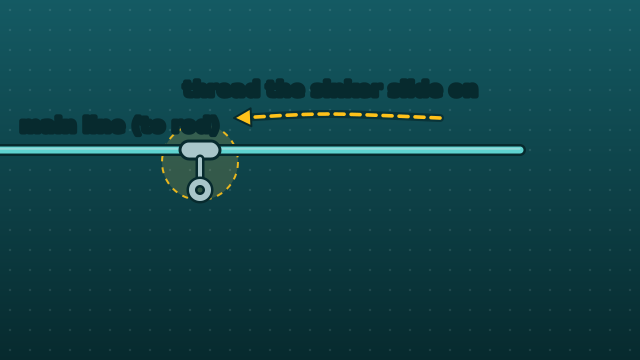
Thread a sinker slide (or the sinker’s own eye) onto your main line.

Add a plastic or glass bead below it. The bead protects the knot from the sliding sinker.

Tie a barrel swivel to the end of the main line with an improved clinch or uni knot.

Tie 45 to 60 cm of leader to the other end of the swivel.
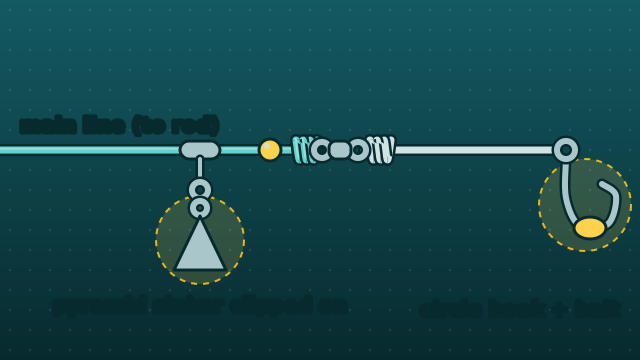
Tie a circle hook to the end of the leader, clip a pyramid sinker to the slide, bait up and cast.
Choosing the right leader
- Length: 45 to 60 cm is standard. A longer leader lets the bait move more naturally in the current but tangles more when casting. A shorter leader casts better and is better in very rough surf.
- Strength: 30 to 40 lb for most surf fish; 50 to 60 lb for big drum and larger bass; add a short piece of wire for bluefish and other toothy species.
- Material: monofilament is economical and tough; fluorocarbon is less visible in clear water. See how to choose a fishing leader.
Why circle hooks are perfect for this rig
The fish finder rig was practically made for circle hooks. A fish takes the bait, swims away, the line comes tight against the rod in a sand spike, and the circle hook slides to the corner of the jaw and sets itself. There is no need to strike. This means more hookups and much safer releases, which matters for big breeding fish. Learn the technique in circle hooks vs J hooks.
Sinker weight for the surf
Use the lightest sinker that holds the bottom. If your bait rolls quickly toward the beach, go heavier or switch to a grip sinker with wire arms. Make sure the weight is within your rod's casting range; read the surf fishing rod length guide to match rod and sinker.
Recommended setups by species
- Red drum and black drum: 50 to 60 lb mono leader, 6/0 to 8/0 circle hook, cut mullet, crab or clams.
- Striped bass: 40 to 50 lb leader, 5/0 to 7/0 circle hook, bunker chunks, clams or sand worms.
- Bluefish: 40 lb leader with a short wire bite section, 3/0 to 5/0 hook, cut mackerel or bunker.
- Pompano and whiting: a lighter version with 20 to 30 lb leader and 1/0 to 2/0 hooks, baited with sand fleas or shrimp.
- European seabass from the beach: 25 to 40 lb fluorocarbon leader, 2/0 to 4/0 hook, crab, squid or worms.
Casting the fish finder rig
Because the sinker can slide, it is easiest to cast with a smooth, controlled swing rather than a hard snap. Some anglers clip the bait to a bait clip near the sinker for longer casts. After casting, let the sinker settle, take up slack, place the rod in a sand spike and set the drag light enough that a fish can pull line if it runs, or leave the reel in a light drag setting with the clicker on.
Common problems and fixes
- Leader tangles around the main line: shorten the leader, use stiffer leader material, or cast more smoothly.
- Knot damaged by the sinker: make sure the bead is always between the slide and the swivel.
- Bait not holding bottom: use a heavier or grip sinker.
- Missed bites: you are probably striking too early with a circle hook. Let the fish load the rod.
Variations
- Carolina rig: the same principle with an egg sinker, used inshore and from boats.
- Pulley rig: a surf rig designed so the sinker sits above the fish when you retrieve, reducing snags. Popular in the UK and Europe.
- Two-hook bottom rig: better when fish are spread through the water just above the bottom. See the dropper loop knot.
Where to fish it
Cast the rig into the gutters, holes and rips you can see from the beach at low tide, as explained in surf fishing for beginners.
Identify your catch with ReelScan: snap one photo to get the species, size and safety notes, and earn points. Scan a fish.
Find out what found your bait
The fish finder rig catches a little of everything, from drum and bass to rays and sharks. ReelScan identifies each catch from a camera photo, warns you about stingrays, toxic pufferfish and other species that need careful handling, and gives you points for every real catch. Keep a record of every surf session and see what each beach holds.
Summary
Thread a sinker slide onto the main line, add a bead, tie on a barrel swivel, attach 45 to 60 cm of leader and finish with a circle hook. Clip on a pyramid or grip sinker heavy enough to hold, bait up and cast to the gutters. The sliding sinker lets fish take the bait without resistance, and the circle hook does the rest.