White Seabass Atractoscion nobilis
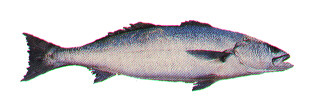
A large silver croaker of California kelp beds, hunted with squid near the surface.
- Family: Sciaenidae
- Rarity: Rare
- Average length: 90 cm
- Max length: 166 cm
- Max weight: 41 kg
- Habitat: coastal
- Regions: pacific-east
- Edible: yes
White Seabass Fishing Guide: How to Identify and Catch White Seabass, Best Bait & Tackle
The white seabass (*Atractoscion nobilis*) is the largest croaker on the Pacific coast of North America, passing 160 cm and 40 kg. It hunts squid around California's kelp forests and Baja California's islands, and anglers call it the "ghost of the kelp" because it appears and vanishes so quickly.
How to identify white seabass
- A long, silver body with a blue-grey back and dark speckles.
- A slightly raised ridge along the belly.
- A large mouth and a slightly forked tail.
Where and when to catch white seabass
White seabass live around kelp beds, rocky reefs and islands, often feeding on squid at night. Spring and early summer are the peak seasons, especially when squid spawn.
Best tackle, baits and lures
- Medium to heavy conventional gear with 30 to 50 lb line. See baitcasting and conventional reels guide.
- Bait: live squid, sardines and mackerel fished near kelp.
- Lures: large metal jigs, soft-plastic swimbaits and squid imitations. See the vertical jigging guide.
- Leader: 30 to 50 lb fluorocarbon.
Find the squid and you will find the white seabass. Look for squid boats and lights at night.
Eating and regulations
White seabass is excellent to eat. California sets minimum sizes and bag limits.
Identify your catch with ReelScan: snap one photo to get the species, size and safety notes, and earn points. Scan a fish.
Common questions
How big does White Seabass get?
White Seabass usually measures about 90 cm. The largest recorded fish reach about 166 cm and 41 kg.
Where can you catch White Seabass?
White Seabass lives in coastal waters, bays and nearshore reefs of the eastern Pacific.
Is White Seabass good to eat?
Yes, White Seabass is good to eat when it is bled and kept on ice.
What family does White Seabass belong to?
White Seabass (Atractoscion nobilis) belongs to the family Sciaenidae.
How many ReelScan points is White Seabass worth?
White Seabass is a rare catch, worth about 30 to 80 points depending on its size. Photograph your catch with ReelScan to identify it and log the points.
Did you know?
Anglers call white seabass the ghost of the kelp because they appear and vanish so quickly.