African Pompano Alectis ciliaris
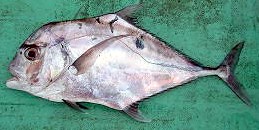
A tall, silver jack with a steep head that fights in wide circles near wrecks and reefs.
- Family: Carangidae
- Rarity: Rare
- Average length: 100 cm
- Max length: 150 cm
- Max weight: 22.9 kg
- Habitat: reef
- Regions: worldwide
- Edible: yes
African Pompano Fishing Guide: How to Identify and Catch African Pompano, Best Bait & Tackle
The African pompano (*Alectis ciliaris*) is a tall, silver jack found in warm seas worldwide. It usually weighs 5 to 15 kg, and big fish pass 20 kg. Adults fight with their broad, flat sides against the line, swimming in wide, stubborn circles.
How to identify African pompano
- A tall, compressed, silver body with a steep, sloping forehead.
- Juveniles have very long, threadlike dorsal and anal fin rays that trail behind them like jellyfish tentacles.
- Adults lose most of these filaments and look more diamond-shaped.
- A row of small scutes near the tail.
Where and when to catch African pompano
Adults live around deep reefs, wrecks, rigs and ledges, usually 20 to 100 m deep. Young fish drift near the surface in open water. Florida, the Gulf of Mexico, West Africa, the Red Sea and the Indo-Pacific all hold good numbers.
Best tackle, baits and lures
- Medium to heavy jigging gear with 30 to 60 lb braid. See the vertical jigging guide.
- Lures: bucktail jigs and slow-pitch jigs worked over wrecks and reefs.
- Bait: live pinfish, cigar minnows and blue runners dropped near structure.
- Leader: 40 to 60 lb fluorocarbon. See how to choose a fishing leader.
African pompano often hold above a wreck rather than on it. Start your jig a few metres above the structure.
Eating and regulations
African pompano is very good to eat, but large fish from some reefs can carry ciguatera. Many areas set bag limits.
Identify your catch with ReelScan: snap one photo to get the species, size and safety notes, and earn points. Scan a fish.
Common questions
How big does African Pompano get?
African Pompano usually measures about 100 cm. The largest recorded fish reach about 150 cm and 22.9 kg.
Where can you catch African Pompano?
African Pompano lives in coral and rocky reefs of warm and temperate seas worldwide.
Is African Pompano good to eat?
Yes, African Pompano is good to eat when it is bled and kept on ice. Note that large fish from some reefs can carry ciguatera, a natural toxin that causes food poisoning.
What family does African Pompano belong to?
African Pompano (Alectis ciliaris) belongs to the family Carangidae.
How many ReelScan points is African Pompano worth?
African Pompano is a rare catch, worth about 30 to 80 points depending on its size. Photograph your catch with ReelScan to identify it and log the points.
Did you know?
Juveniles trail long threadlike fins that look like jellyfish tentacles.